We have had nearly a week to process our nine days in Nairobi, but I feel like I am still sifting through the many experiences that comprised our time there. Looking back on it, we realize that the first couple of days that we were there, we experienced culture shock in a way that we never have before in traveling overseas. Even though I had been to Mathare Valley just last year, being back in the slums this time was more jarring to both my physical senses– sight, sound, smell, touch– and my emotional perception of the surroundings that I found myself in each day. Perhaps part of the shock can be attributed to viewing my role through the lens of potentially living in Nairobi one day and working among that community on a daily basis. Certainly a very different perspective than being on a short-term mission trip. Also, from day one, we were enmeshed with life in one of the most impoverished places in the world.
A typical household in Mathare consists of a family of two adults– husband and wife or perhaps sisters, like the grandmothers we met– with three to six children or grandchildren of varying ages, living in a shanty no bigger than eight feet by eight feet. Sometimes the shanties were even smaller, so small that the front door could not fully extend open and the five of us visiting– Giles, me, and three social workers– could not comfortably sit down, even though we were always offered a seat by our host (which usually meant that our host had to stand, oftentimes with a baby or toddler in tow, so that we could sit). Most dwellers divided their single room into a living room/ kitchen area and sleeping area, separated by a curtain or swath of material. None of the shanties had windows, so the only ventilation and light came from the open front door, which often could not open very wide due to the lack of indoor space. With the equatorial sun beating down on solid tin roofs all day, most homes felt like furnaces. Very few shanties have electricity because it is not generally available in the slum unless it is illegally spliced from a central source through rudimentary, exposed wiring. Because of these dangerous practices and the close proximity of the houses to each other, the risk of fire is high, which is a constant source of terror for residents. (We heard this fear expressed often by those we visited.) As it has in the past in the slum, fire spreads rapidly and can quickly consume an entire community, a cruel outcome for those who already have so little possessions. Engulfing the densely-packed shanties is a landscape of dirt, garbage, seemingly impassable “roads,” and rivers of raw sewage, with people and animals everywhere.
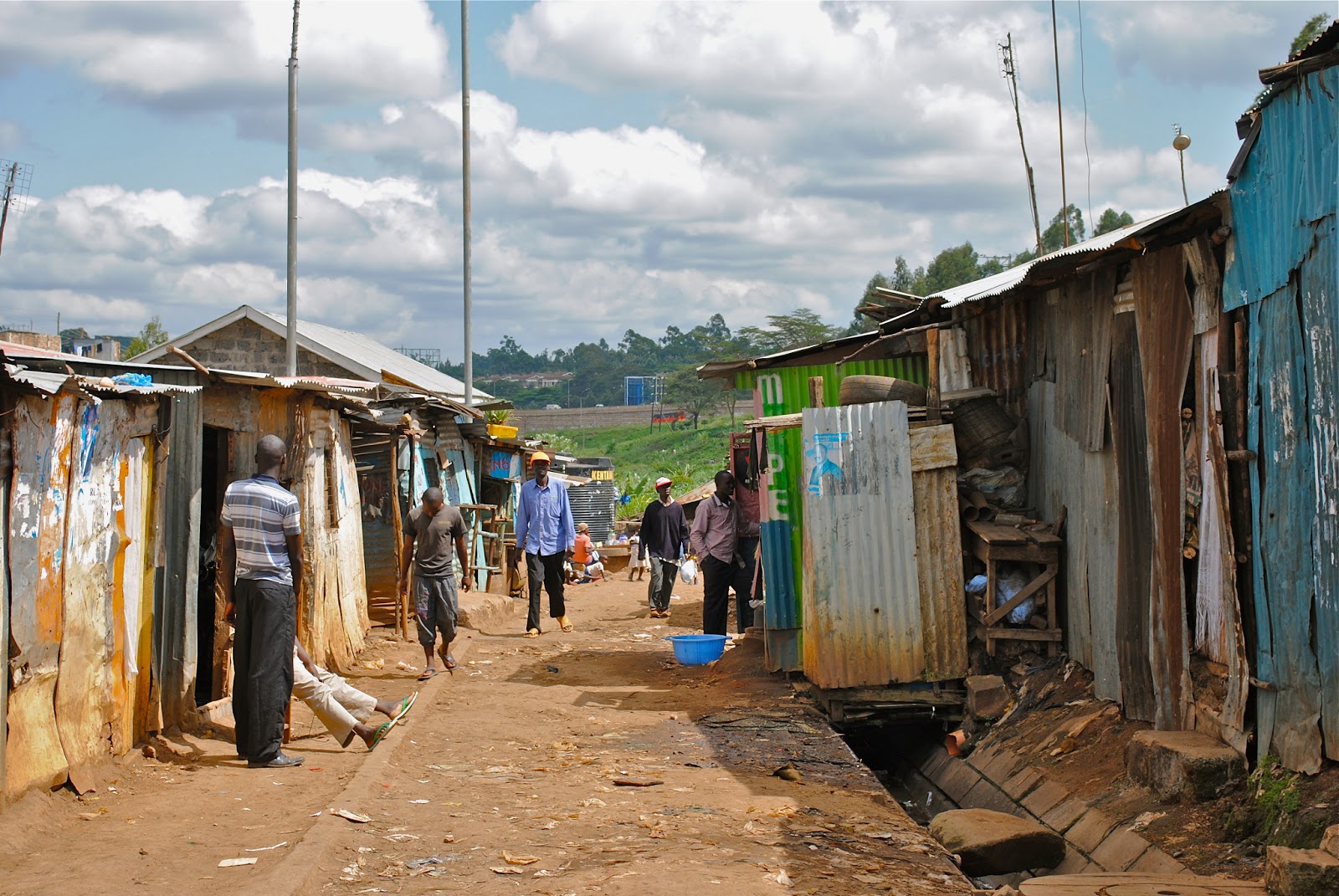
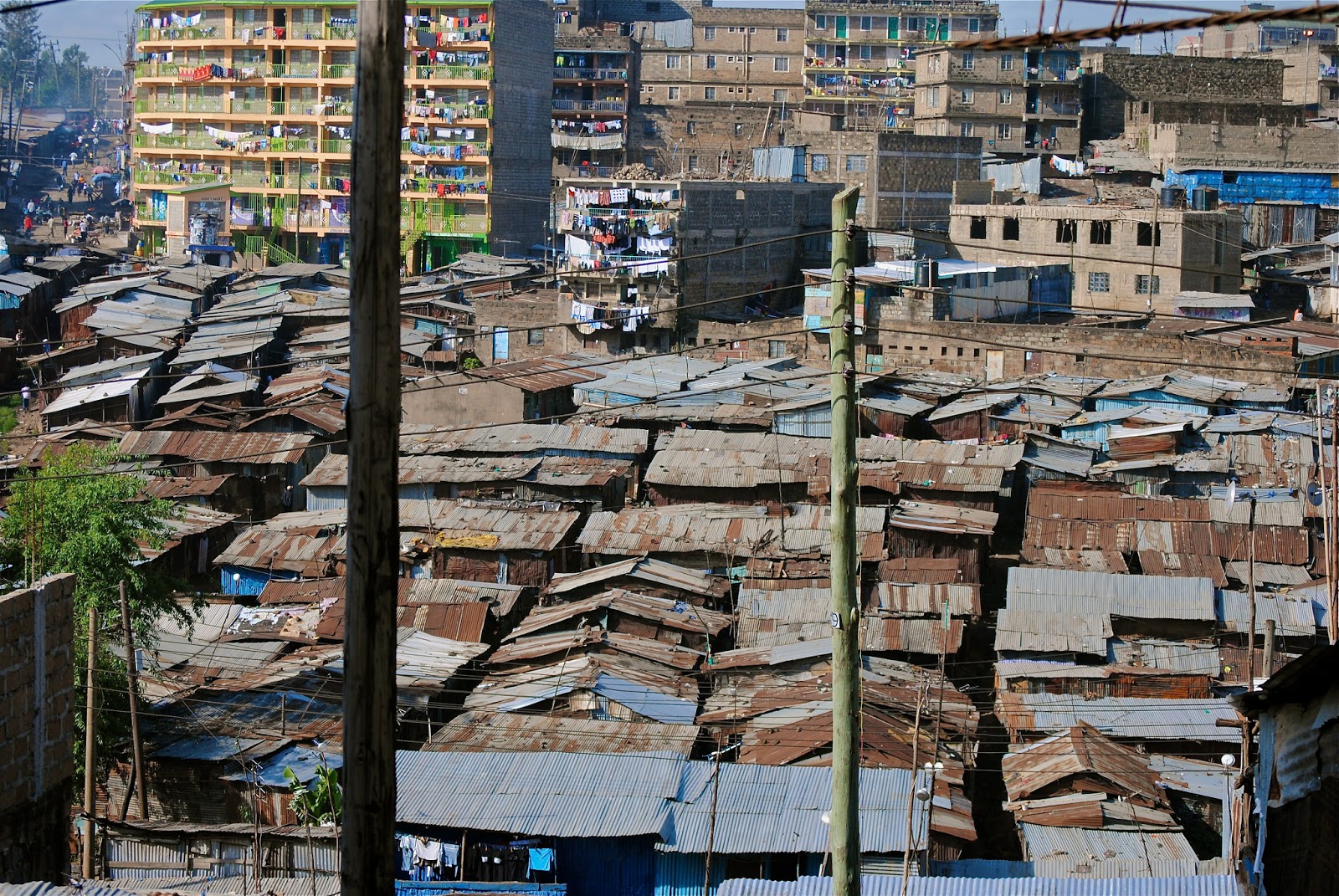
After two days of intensive work in these surroundings, I found myself inwardly retreating. Part of me (honestly, a huge part of me in those first couple of days) actually wanted to come home, despite my deep longing to be there. Later in that first week, Giles admitted to me that he had experienced the same feelings initially. Then, just as we were feeling more comfortable and getting into a rhythm there the second week, we were preparing to leave. In reflecting, we discussed our feelings about this place of contrasts. It is abject poverty infused with the riches of authentic community. Chaos teeming with life, beauty, and love. The vibrant colors of the people (reflected not only in how they dress but also how they seem to inwardly shine) appear more intense against the drab landscape. The intensity of the Kenyan sun spills over everything, despite pockets of darkness.
Lately, we have come to realize that it wasn’t only culture shock in the traditional sense that produced a fight-or-flight mentality in us during those initial days in Nairobi. It was also a spiritual shock, a “kingdom culture shock,” so to speak. During this season of our pursuit of God, wherever He may ultimately lead us, falsehoods are being stripped away, and bit by bit, reality is being revealed. Perhaps unearthed is a better term, given where we have just been. It’s like scratching off a corner of a cheap dime-store painting to discover a Rembrandt underneath. God is showing us life in His kingdom, a reality that differs greatly from ours. In God’s kingdom, people matter much more than possessions. Relationships make you rich, not how much stuff you can accumulate or personal accomplishments that you can tick off a list. The needs of others are exalted before personal desires so that the Son can be glorified. We enter this reality when we fully surrender our whole being to the Father– all of who we are, including what we think are His plans for us. As we were reminded by a Kenyan pastor, His purposes for us are immeasurably greater than we can ask or imagine. (Eph. 3:20)
The collision of our false reality, the one we have erected and clung fast to in our worldly culture, with this kingdom reality is disarming. No matter how many pieces God is stripping away in order to recreate us, there is still more work to be done in us. When God presses in a little closer, like He did in Kenya, it isn’t always comfortable. His closeness unveils more of our hiddenness. Sometimes it feels like staring headlong into a bright spotlight. However, it also feels more real than any “reality” that we’ve created. So I guess that I’m willing to accept a little spiritual pain and discomfort if it means that God will reveal more of Himself to me and His heart for this world.
 A Life Called to Love