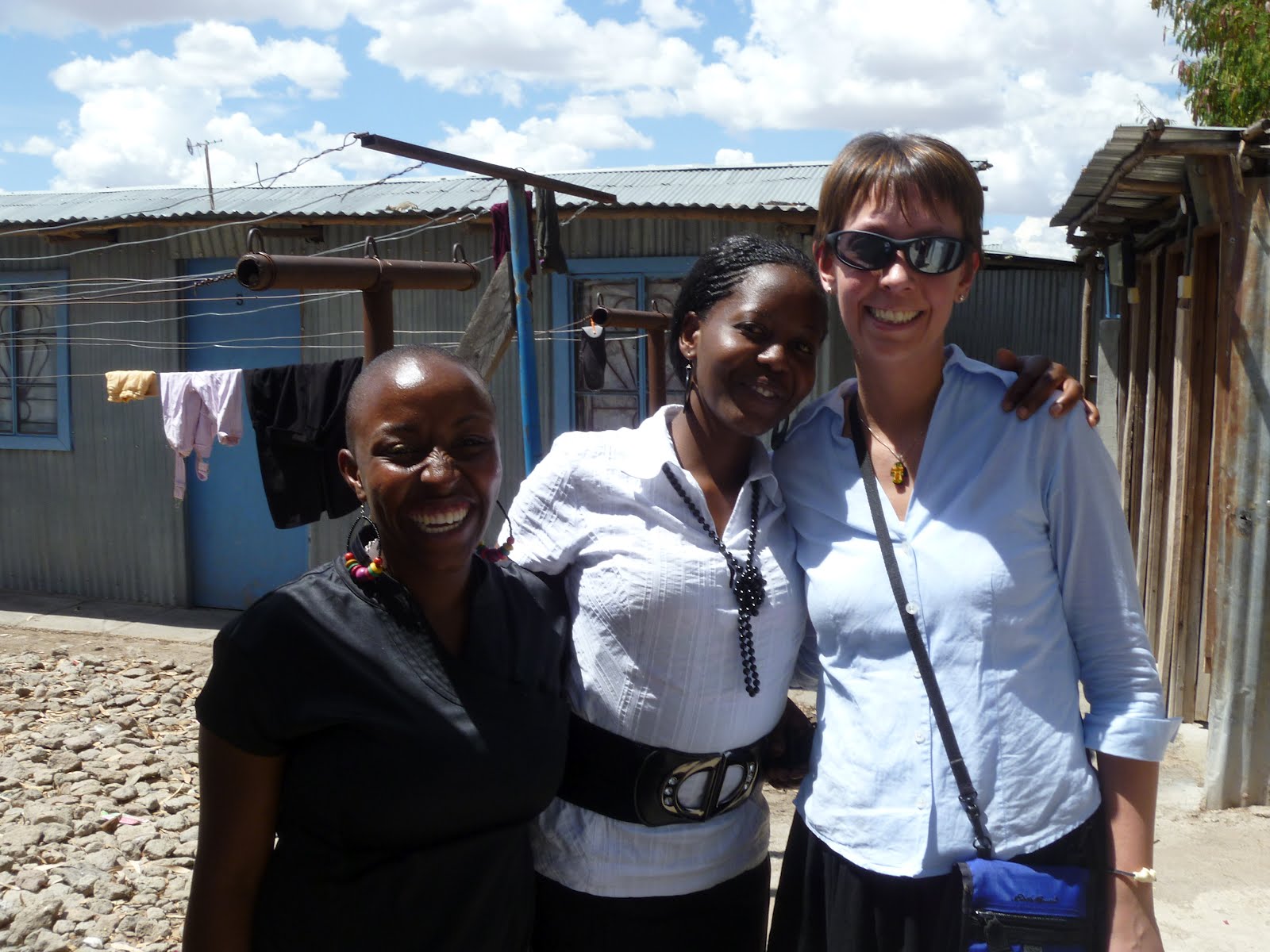
 The beauty of the Kenyan countryside was eclipsed, if not surpassed, by the beauty and generosity of its people. I have read that the less a Kenyan has, the more generous he/she is to others, and I can definitely relate to that sentiment. The Swahili word for “welcome” is “karibu,” and the spirit of karibu was evidenced everywhere we visited.
One striking common denominator was that women often were the ones called upon to serve us. Women washed our hands before each meal. Women served us our meals each day. At the end of our last day at the school in the Bondeni slum, the children thanked us with a heart-warming appreciation ceremony. In preparation for it, a woman washed the dirt-laden ground where our chairs sat so that dust would not cloud us as we watched.
I think it is safe to generalize by stating that the feminist movement has not found its way to the slums of Nairobi. My understanding (which admittedly could be limited) is that women possess little, if any, property rights in Kenyan society. The single women I met in my home visits in Mathare Valley slum both rented the shanties that they lived in. Furthermore, I was told that if a woman has HIV/AIDS, her husband can kick her out of her own house at will (with her children, no less) with no legal recourse (regardless of whether her husband infected her). Also, polygamy has not been outlawed in Kenya, and even if a man does not have multiple wives, Kenyan society freely accepts him having multiple affairs as a matter of right. Yet despite their legal status, my observation of Kenyan women is that their servant hearts, pride, and love for their children inspire them to work extremely hard with little recognition or gratitude. Women typically are the primary breadwinners in slum households, providing for their families as seamstresses, jewelry makers, laundresses, grocers, restauranteurs, etc., while their men remain in a perpetual state of drunkenness and addiction from the illegal alcohol that they brew in the slum. Many single women populate the slums of Nairobi, yet they still manage to earn a meager living to send their children (often not their own by blood relation) to school so that they can leave the slum one day. This was certainly evidenced by the many women who are represented by the burgeoning micro-finance revolution in Mathare Valley, spear-headed by Missions of Hope/CMF. (See link on this blog to http://www.bigdent.org.)
So I say a resounding “asante sana” (thank you very much in Swahili) to my Kenyan sisters. For their unrecognized efforts to care for their beloved. And for serving me, a stranger and visitor, with the heart of Christ.
(p.s. My sisters in the photo are Shaio and Faith, teachers at the Joska Boarding School, who graciously gave us a tour of the school while teaching us a bit of Swahili!)
 A Life Called to Love
A co-worker was talking to me this week about her daughter's mission trip to Dominican Republic. Her daughter is a nurse and went there to start a medical clinic. She told her mother about the many women they treated in the clinic for sexually-transmitted diseases and other related issues due to the cultural acceptance of husbands having multiple affairs with other women. As one of the men on my trip ruminated aloud, “You can find men behaving badly all over the world.” What a tragedy! It's time for men of God to take a stand for the “beauties to be rescued” in their own sphere of influence and all over the world.